Food & dietary needs · Mainland China
How to eat vegan or vegetarian in China
China has plenty of tofu, mushrooms, vegetables and dedicated vegetarian restaurants. The part that takes practice is finding out how a dish is cooked: a plate of greens can arrive with oyster sauce, and a vegetable noodle soup can start with meat stock.
By TravelPalPal · Updated October 21, 2026 · 6 min read
The short answer
Start with a dedicated vegetarian restaurant near your hotel. Search for 素食 or 素食餐厅 in your map or restaurant app, then check recent menu photos. If you are vegan, confirm eggs, dairy and honey as well as meat and seafood. At other restaurants, ask about the broth, cooking fat and sauces before choosing a dish.
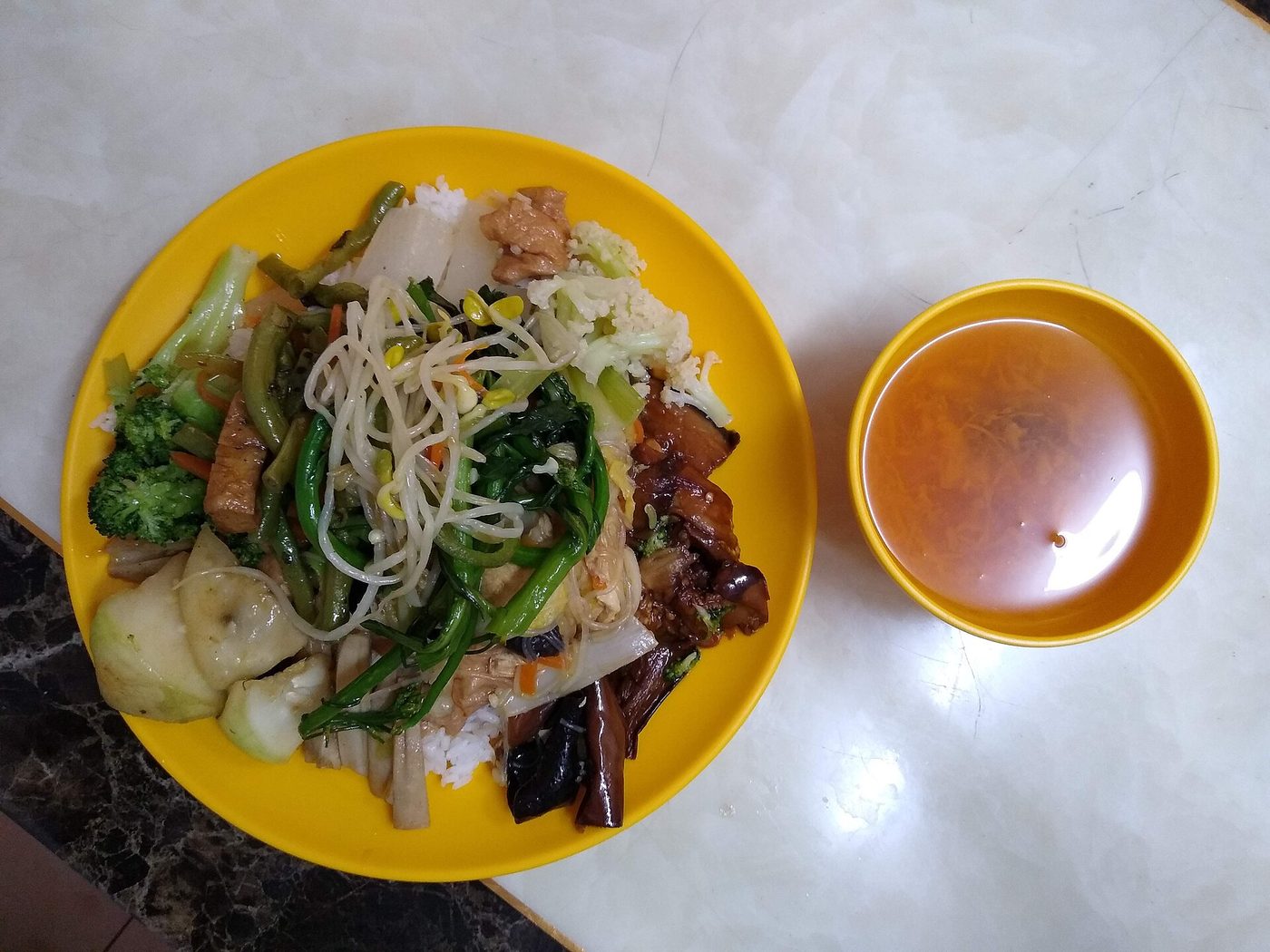
Rice, vegetables and soup at a vegetarian restaurant in Guangzhou.
Mx. Granger / Wikimedia Commons · CC001
How to find vegetarian restaurants near your hotel
Search 素食餐厅 (vegetarian restaurant) or 素食 (vegetarian food) in Amap or Dianping. For a buffet, try 素食自助. Add the neighborhood or landmark if the results spread across the whole city. Save the Chinese name, branch and entrance on your map before setting out.
HappyCow is useful for English-language reviews. Xiaohongshu adds recent meal photos and local suggestions: search the city name with 素食 or 纯素, then check when the post was published. Use both to make a shortlist, and confirm opening hours in the restaurant’s current listing.
Look for a menu with several tofu, mushroom and bean dishes so you have enough choice for a full meal. Save a second place nearby, especially for your first evening or a late arrival.
02
What to check when a restaurant says “vegetarian”
Some restaurants listed under 素食 use eggs or milk. 纯素 and 全素 are more specific search terms for vegan food; still explain the ingredients you avoid when ordering. If you eat eggs and dairy, say so too—it gives the kitchen more options.
Buddhist vegetarian restaurants and temple canteens can be good places to look. Check whether the canteen serves visitors, when it opens and which dishes fit your diet. Cakes, drinks and prepared mock meats deserve the same ingredient check as anywhere else.
Vegan food excludes animal ingredients, including eggs, dairy and honey. It does not mean free from peanuts, sesame, soy or wheat. If you also have a food allergy, make a separate request about that allergen and food preparation.
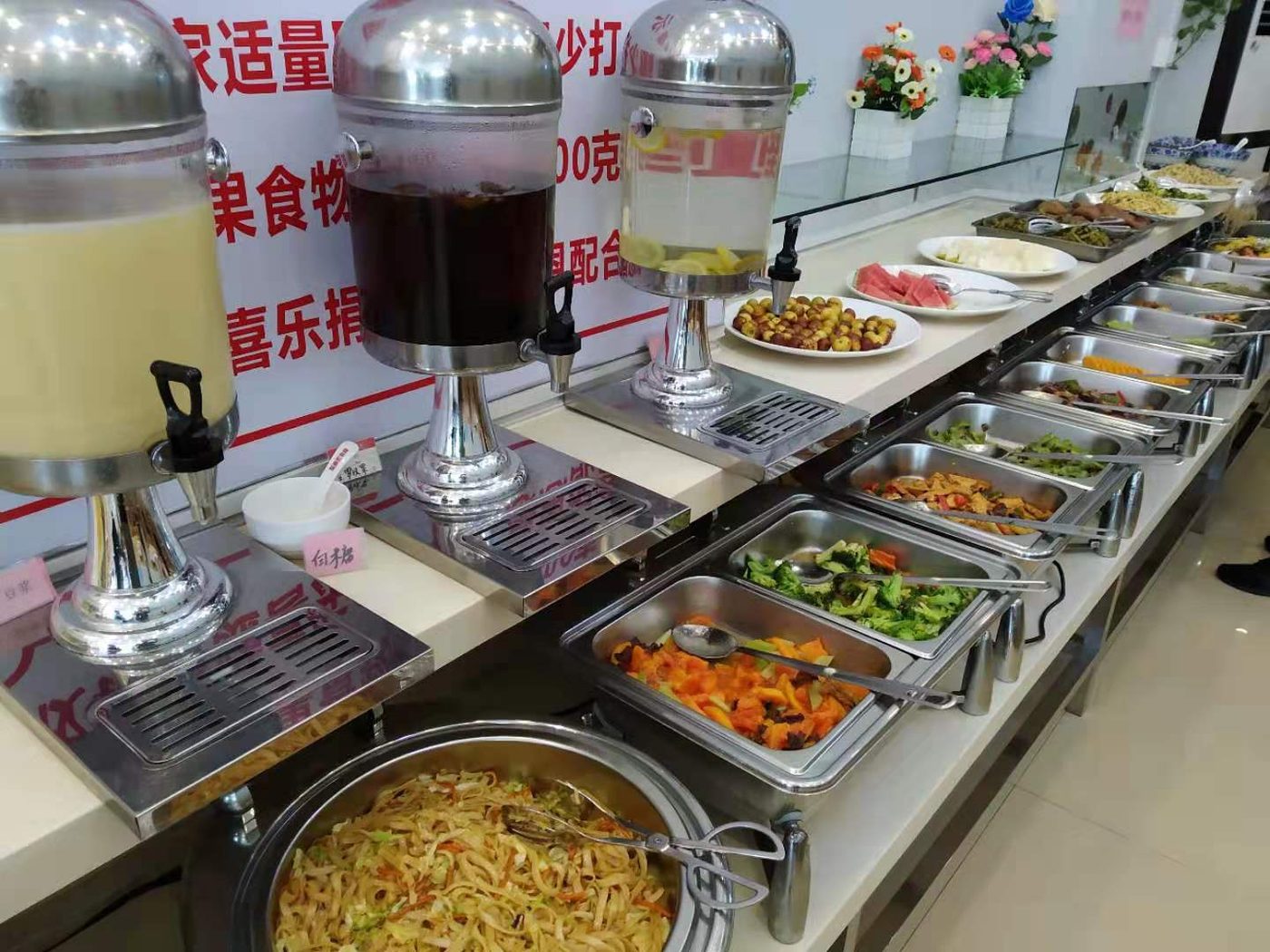
A vegetarian buffet in Shenzhen. Ask which trays contain eggs or dairy before filling your plate; the buffet format alone does not tell you.
Mx. Granger / Wikimedia Commons · CC003
Check the broth, sauce and cooking fat
A dish’s name usually describes its main ingredients, not everything in the wok. Greens can be seasoned with oyster sauce; a tofu dish can include minced pork; dumpling fillings can contain egg or dried shrimp. Ask staff to check the recipe with the kitchen, including the stock and seasoning.
Explain the full request before the food is prepared. Leaving out a topping is straightforward when it is added at the end; removing meat from an already-made soup or filling does not change the other ingredients. A different dish is often easier than adapting a premixed one.
| Ingredient | Where you might encounter it |
|---|---|
| Oyster sauce · 蚝油 | Stir-fried greens, mushrooms and noodle sauces. Ask whether a mushroom-based vegetarian sauce is used instead. |
| Lard · 猪油 | Noodles, pastries and some vegetable dishes. Request vegetable oil. |
| Meat stock · 肉汤 / 鸡汤 / 骨汤 | Soup noodles, hotpot and vegetable soups. Ask what the broth is made from. |
| Dried shrimp · 虾皮 / 虾米 | Dumpling fillings, soups and vegetable dishes. |
| Egg · 鸡蛋; milk · 牛奶 / 奶粉 | Noodles, tofu products, bakery items, drinks and desserts. |
04
What to order at a restaurant that also serves meat
A practical starting order is rice, a tofu or bean dish, and a vegetable dish. Ask which versions the kitchen can make with vegetable oil and without meat stock or animal-based sauces. Tofu with mushrooms, garlic greens and stir-fried potato strips give you a few concrete options to ask about.
For vegetarians who eat eggs, tomato and egg is another option to ask about. For vegans, a vegetable dumpling or bun needs a filling check: “vegetable” can include egg. Mock duck and mock chicken at a vegetarian restaurant are worth trying, but ask what they are made from if you avoid soy or wheat.
If you are sharing a meal with people who eat meat, order the vegetarian dishes together and keep serving utensils with each plate. Tell staff which dishes need the changes so the request reaches the right part of the order.
05
How to order vegan hotpot or malatang
At malatang shops, you choose ingredients for a soup that staff cook for you. Ask whether the broth contains meat stock, animal fat or dairy. Tomato and mushroom describe flavors, not a complete ingredient list. At malatang shops, check whether a separate vegetable broth or plain-water preparation is available before you fill a bowl.
For hotpot, a separate pot makes it easier to keep your meal apart from meat and seafood. Add tofu, mushrooms, leafy greens and noodles after checking their ingredients. A divider in a communal pot does not prevent broth splashing or other diners dipping utensils into both sides.
At the sauce counter, ask what is in the pastes and prepared mixes. Soy sauce, sesame paste, garlic and vinegar can form a vegan dip when their ingredients fit your diet; seafood sauces and mixed condiments need a closer look.
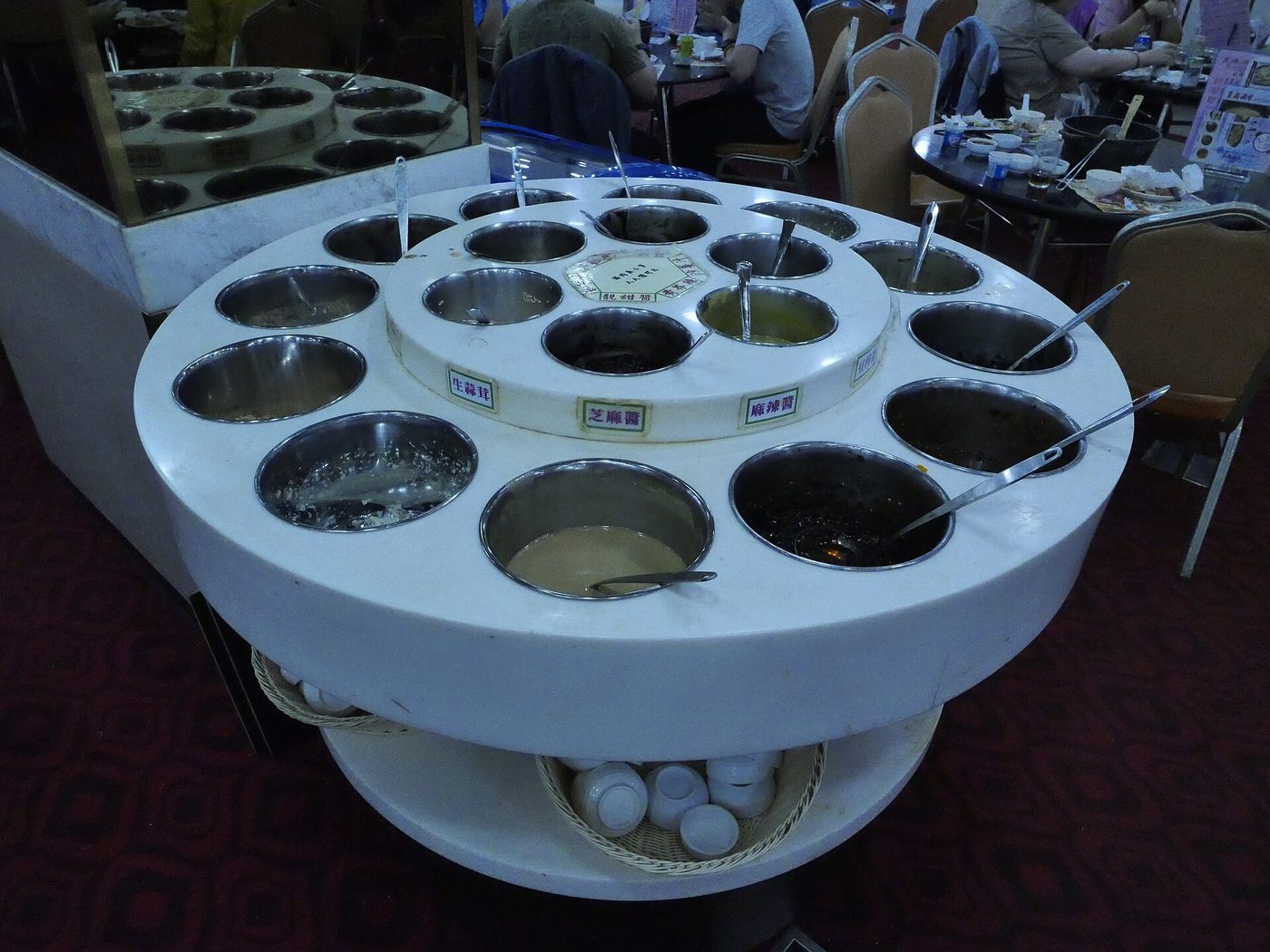
At a hotpot sauce station, check the ingredients in prepared pastes and sauces before mixing your dip. The labels identify the condiments, not their full recipes.
Peachyeung316 / Wikimedia Commons · CC BY-SA 4.0 · resized06
Plan breakfast and meals on travel days
For breakfast, look for plain congee (rice porridge), steamed sweet potatoes, corn, soy milk or buns with a confirmed vegan filling. Savory congee and soy-milk toppings vary, so check the version being served. At cafés, a plant-milk swap does not change dairy in whipped toppings or a premixed drink base.
For a long train journey or a late check-in, buy food before leaving a neighborhood where you have choices. A supermarket gives you time to read labels; the train’s meal trolley gives you fewer options. Pack a meal from a restaurant you have already checked, along with snacks that suit your diet.
With delivery, contact the restaurant about ingredients before paying if you need changes. The order-notes box is useful for recording an agreed request, but it is a poor place to begin a conversation about an unfamiliar ingredient.
Frequently asked questions
- Is tofu always vegan?
- Plain tofu is made from soybeans, but the finished dish can contain meat, egg or seafood seasonings. Egg tofu is a different product and contains egg. Check the dish, not just the word tofu.
- Does “Buddhist vegetarian” mean no garlic or onions?
- Some Buddhist kitchens avoid particular pungent vegetables, including garlic and onions. That practice is separate from avoiding animal ingredients. Ask about your own requirements rather than using one label to stand in for the other.
- Will I need to cook every meal myself?
- Not necessarily. In a city with dedicated vegetarian restaurants, you can plan around those and use other restaurants when they can explain or adapt a dish. A kitchen becomes more useful on longer stays, in areas with fewer choices, or when you have additional dietary restrictions.
Before you travel: Menus and recipes vary by restaurant and branch. Photos illustrate the meal or setting; they do not verify a dish’s ingredients. For an allergy or celiac disease, use the separate guides and follow your clinician’s advice.