Food & dietary needs · Mainland China
Traveling in China with food allergies: a practical guide
The difficult part of eating with an allergy is often a sauce, cooking oil or shared utensil rather than the main ingredient on the menu. Planning a few meals ahead gives you time to ask the kitchen properly and choose somewhere else if the answer is unclear.
By TravelPalPal · Updated October 21, 2026 · 7 min read
The short answer
Before traveling, review your emergency plan with your clinician, carry your prescribed medication and prepare an accurate Chinese translation of your specific allergies. For each restaurant meal, check both the ingredients and how the food will be prepared. For suspected anaphylaxis, follow your emergency plan, use prescribed epinephrine promptly and call 120 for an ambulance in mainland China.
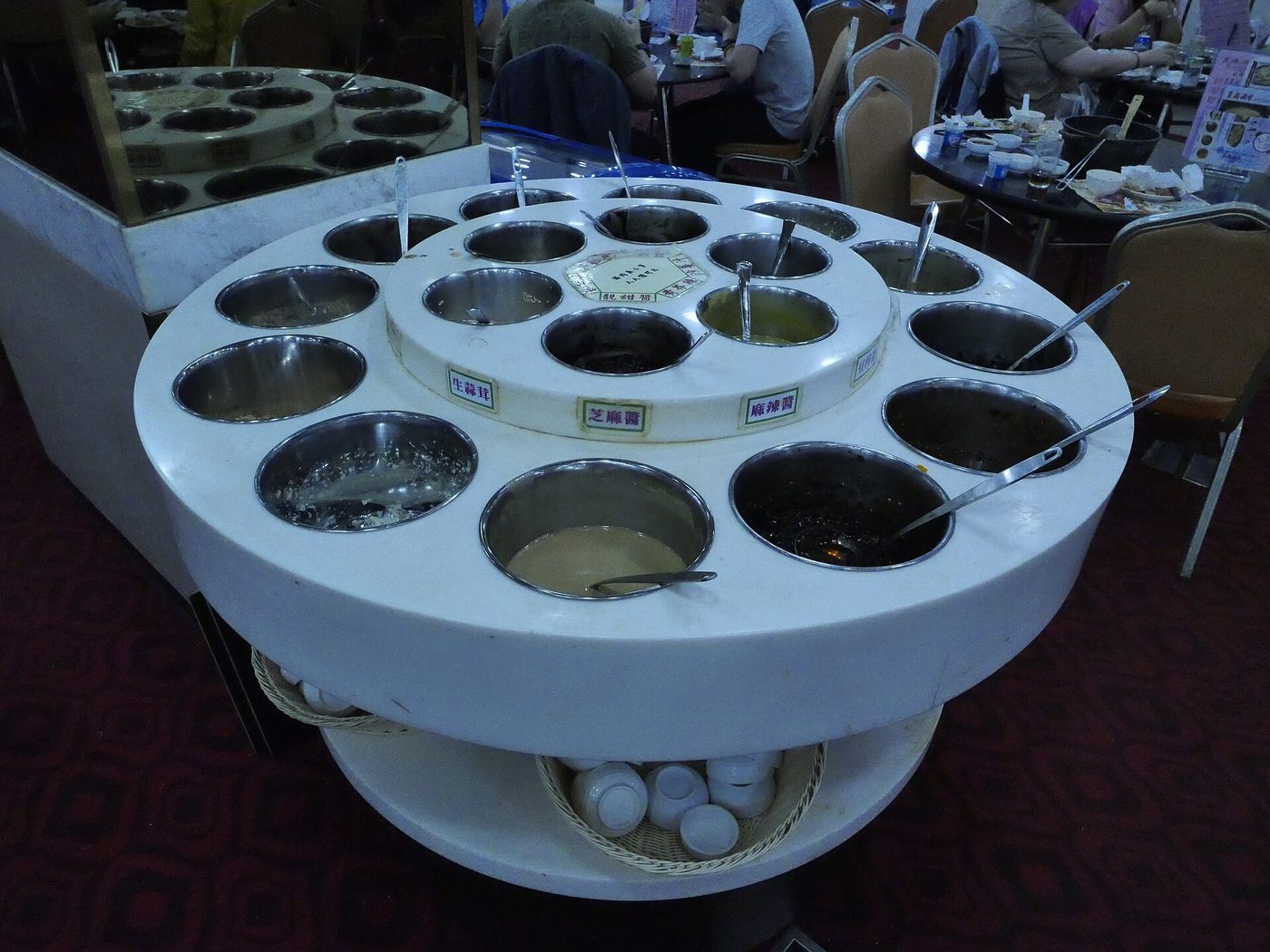
A hotpot sauce station: sesame paste has its own label, but sauce names do not list every ingredient. Shared serving spoons also matter when you have an allergy.
Peachyeung316 / Wikimedia Commons · CC BY-SA 4.0 · resized01
Prepare medication, a translation and your first meals
Discuss the trip with your allergist or treating clinician, particularly if you have a history of severe reactions. Check that your action plan and prescriptions are current. Carry the medication they prescribe in your hand luggage and keep it accessible during meals and outings; check expiry dates and the manufacturer’s storage instructions.
Prepare a written Chinese explanation of your exact allergens and required precautions, with a printed copy as well as an offline phone copy. Have the translation checked by a qualified translator familiar with allergy terminology. A generic “no nuts” message can miss the particular nut or ingredient you need to avoid.
Contact your hotel and any tour operator before arrival about the first dinner and breakfast. Ask them to put you in touch with the person responsible for food preparation. If reliable meals are difficult to arrange, accommodation with a kitchen gives you another option. Check that your insurance covers your condition and emergency treatment.
02
Where allergens can appear in Chinese meals
Explain the allergy before the kitchen starts cooking. Name the specific food and ask about oils, sauces, fillings and garnishes as well as the main dish. Use the examples below to ask about ingredients relevant to your allergy.
| Your allergen | Ingredients or preparations to ask about |
|---|---|
| Peanuts · 花生 | Peanut oil, crushed toppings, dipping sauces, cold noodles and mixed chili sauces. Ask which oil the kitchen actually uses. |
| Tree nuts | Name your specific nuts, such as cashew (腰果) or walnut (核桃). Check desserts, fillings and sauces. |
| Sesame · 芝麻 | Sesame paste (芝麻酱), sesame oil (芝麻油 / 香油), toppings and baked goods. Sesame is a separate allergen from peanuts and tree nuts. |
| Shellfish or fish | Specify which you avoid. Ask about dried shrimp, oyster sauce, fish sauce and stock, including in vegetable dishes. |
| Milk or egg | Bakery items, creamy soup bases, egg tofu, sauces and drink toppings. Lactose-free milk is not suitable for a milk-protein allergy. |
| Soy or wheat | Soy sauce, tofu, mock meats, marinades, coatings and premixed seasonings. A gluten-free claim is not a substitute for wheat-allergy checks. |
Vegetarian restaurants can still use peanuts, sesame, soy, wheat, eggs or dairy. An English menu, an international brand or another traveler’s successful meal does not establish whether a kitchen can accommodate your allergy.
03
How to check a meal before ordering
Choose a time when staff can talk to the kitchen, and show your translated allergy information before selecting dishes. Ask who can confirm the ingredients and preparation. For a sauce or packaged seasoning, seeing its current label is more useful than a general description such as “just seasoning.”
Work through one proposed dish: what goes into it, whether any part is premade, and whether the kitchen can avoid your allergen during preparation. If the server only offers to remove a garnish, explain that you also need the cooking ingredients and equipment checked.
If staff cannot identify an ingredient or explain how they will handle the meal, choose another option. Do not taste a small amount to test it.

A real example: this Lee Kum Kee US-market soy sauce lists wheat flour and declares soybeans and wheat. Check the bottle in front of you—recipes and labels differ between products and markets.
Lee Kum Kee · excerpt from the US product page04
Ask about shared oil, cookware and serving utensils
Cross-contact happens when an allergen transfers from one food to another. A dish without your allergen in its recipe can still be affected by a shared fryer, preparation surface or utensil. Cooking does not reliably remove the allergenic protein.
Ask whether the kitchen can use properly cleaned equipment and utensils, an appropriate preparation area and cooking oil that has not been used for your allergen. At a shared meal, discuss serving utensils and keep other diners’ food out of your plate or pot.
Buffets and communal hotpot add more handling: serving spoons can move between trays, sauces can spill and diners can mix utensils. An individual pot addresses the shared broth, but its stock, sauces and preparation still need checking. Choose the meal format the kitchen can actually manage for you.
05
Check packaged food and arrange backup meals
On packaged food, look for 配料表, the ingredient list, and 过敏原, allergen information. Read both, including ingredients inside sauces or seasoning packets and any cross-contact warnings. A camera translation helps you read the label, but it cannot supply missing information or resolve an ambiguous ingredient.
Check the actual package each time, even for a familiar brand: recipes differ across countries and can change. If you cannot establish whether a product fits your needs, contact the manufacturer or choose a food you can verify. The absence of a warning is not proof that cross-contact is impossible.
Keep suitable food at your accommodation and take enough for long journeys. For delivery, confirm directly with the restaurant that it can meet your requirements before relying on the meal; an unchecked order note is not confirmation. When traveling with a group, arrange your meal with the organizer before the day’s outing.
06
What to do if you have a severe allergic reaction
Follow your personal emergency action plan. Trouble breathing, throat tightness, faintness or other severe symptoms can signal anaphylaxis. Use your prescribed epinephrine promptly as directed and call 120 for an ambulance in mainland China. Antihistamines are not a replacement for epinephrine in anaphylaxis.
Ask someone nearby to call if you need help communicating. Give the Chinese address and the restaurant or hotel name, and tell emergency responders about any epinephrine already used. Get emergency medical care even if symptoms improve.
Before your trip, show your travel companion where your medication and action plan are kept. Save your hotel’s Chinese address and nearby hospital emergency departments offline. This preparation makes it easier for someone to help without searching through your bookings during a reaction.
Frequently asked questions
- Can I rely on a chain restaurant I use at home?
- Check the local menu, ingredients and kitchen procedures. A familiar name does not mean the recipe or preparation is the same as in your home country. Ask the specific branch about the dish you want.
- Should everyone with a peanut allergy also avoid sesame?
- Your clinician should define your avoidance list. Peanuts, tree nuts and sesame are different allergens. Name the ones relevant to you rather than treating them as interchangeable.
- Can a Local Pal make restaurant meals safe for me?
- A Local Pal can help translate questions and communicate with a restaurant. They cannot verify hidden ingredients, supervise every kitchen process or guarantee an allergen-free meal. The restaurant still needs to explain whether it can meet your requirements.
Before you travel: This is travel-planning information, not personalized medical advice. Follow your clinician’s avoidance and emergency plans. No restaurant, menu label or photo in this guide is a guarantee of an allergen-free meal.