Xi’an · Practical planning
Terracotta Warriors: tickets, transport & a visit route
Book a morning entry to the Terracotta Warriors Museum, visit Pits 1, 3 and 2, then use the included shuttle to Lishan Garden for the bronze chariots. The two sites share a ticket but have separate entrances. Allow a full day from central Xi’an; if you only have half a day, concentrate on the warrior pits and leave Lishan Garden out.
By TravelPalPal · Updated
5 min read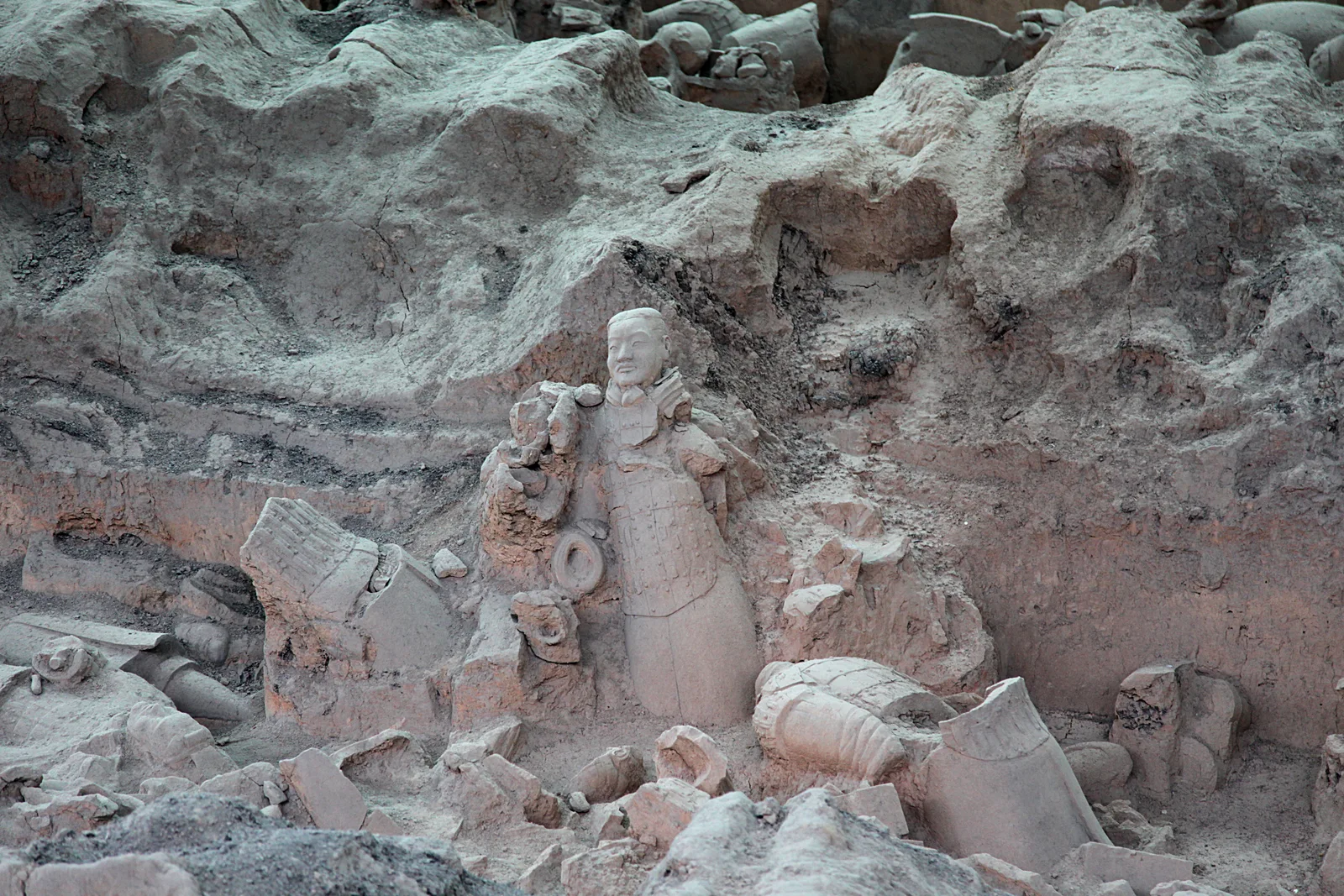

Tickets and booking with a foreign passport
Standard adult admission is RMB 120, covering the Terracotta Warriors Museum and Lishan Garden on the same day, with a free shuttle between them. Reserve a timed entry through the museum’s official ticket page or its WeChat account, 秦始皇帝陵博物院. Select passport as the document type and enter the traveler’s passport details.
Bring the original passport and your completed booking. The museum asks visitors to arrive 30 minutes before their entry slot. Its published concessions have nationality and document conditions, so foreign families should confirm eligibility before buying discounted tickets. If the Chinese checkout prevents you completing the reservation, use the ticket link on the museum website or ask your hotel to help; have any booking service confirm admission separately from its guide or transport extras.
Getting there from central Xi’an
From Zhonglou, take Metro Line 6 toward Fangzhicheng, change there to Line 9 toward Qinlingxi, and get off at Huaqingchi (华清池). Follow the station directions to the Huaqingchi bus stop and take Lintong tourist bus 613 toward Bingmayong (兵马俑). Allow about two hours from the Bell Tower area, including the bus wait and the walk to admission. There is no metro station at the museum entrance.
Published directions disagree on the best Huaqingchi exit, so use the station’s current bus signs rather than relying on an old exit letter. The bus must show the Terracotta Warriors as its destination. If the connection is unclear or you need an early entry, a taxi from Huaqingchi is a straightforward final leg. A car directly from your hotel saves the transfer; allow roughly 60–90 minutes each way and agree the return pickup separately.
For the return, leave through the museum exit and follow signs to the public transport area for bus 613 toward Huaqingchi. Reverse Lines 9 and 6 to Zhonglou. If you add Lishan Garden, take the free inter-site shuttle back to the Warriors transport area first. A booked driver should confirm which of the two sites you will finish at.
A route through the three warrior pits
Enter at the museum’s North Gate and continue through the checks to the exhibition area. Start with Pit 1: pause for the broad view of the ranks, then follow the perimeter to see the soldiers from the side and the restoration area farther back. Allow 45–60 minutes here rather than spending the whole visit at the first crowded railing.
Continue to the smaller Pit 3, interpreted as a command area, then Pit 2 for the different troop types and closer displays of individual figures. This order makes the change in scale easier to appreciate. Follow the current exhibition flow inside each hall; the route below is a suggested sequence between halls, not a promise that every internal walkway is open.
Allow about 2½–3 hours for the pits and any open exhibition galleries. If you want an English guide, arrange one whose language and meeting point are confirmed, or ask at the visitor service desk about current options. A roadside guide’s low advertised price can exclude admission or cover only a short talk; ask for the full price and route before agreeing.
- North Gate → ticket and security checks
- Pit 1 → panoramic view and perimeter
- Pit 3 → command-area interpretation
- Pit 2 → troop types and figure displays
- Open galleries → East Gate exit
- Free shuttle → Lishan Garden, or return transport
Adding Lishan Garden and the bronze chariots
After the warrior pits, follow the exit through the commercial area to the signed free shuttle in the museum parking area. At Lishan Garden, prioritize the Bronze Chariots and Horses Exhibition Hall, then the K9901 and K0006 burial-pit displays if time and access allow. Leave about two more hours for this part, plus the shuttle waits. The mausoleum mound is an outdoor stop; the emperor’s underground burial chamber is not open for visitors.
The inter-site shuttle is included; electric carts within the sites are separate. The museum publishes RMB 5 for the Warriors approach cart and RMB 15 for the Lishan Garden cart. Walking to the warrior halls is possible, while the larger distances at Lishan make its cart useful for visitors conserving energy. These carts do different jobs, so a package mentioning a ‘shuttle’ should name which ride it covers.
Entry hours and a workable day plan
Admission starts at 08:30. Last entry is 17:00 from March 16 to November 15 and 16:30 from November 16 to March 15; holiday arrangements can differ. Use an early reserved slot for this two-site plan. Last entry is too late to begin a relaxed visit to both sites.
For example, reach the North Gate around 08:00 for an 08:30 reservation, spend the morning in the warrior halls, then eat in the exit commercial area before transferring to Lishan Garden. Aim to start the journey back to Xi’an in mid-afternoon. This is an editorial schedule, with room for queues; it works best as the dedicated museum day in the Xi’an three-day itinerary.
For a shorter visit, keep the three pits, skip the second site and return to the city for lunch. Combining both museums with Huaqing Palace and an evening show makes a much longer day, with separate tickets and a late return. Decide that combination before booking transport rather than adding it after the museum.
Reviewed October 23, 2026. Admission, passport requirements, entry hours and cart charges follow the museum’s published visitor guide. Transport times are planning allowances; confirm the bus destination at Huaqingchi. Individual exhibition routes can change during archaeological work.
Sources & useful links
Prepared by TravelPalPal using the references below. Routes and pacing are editorial suggestions; use official venue information for current tickets, opening hours and access.
More of Xi’an
Back to the city guideItineraries
Three days in Xi’an: the old city & beyond
A practical three-day Xi’an itinerary with the City Wall, Terracotta Warriors, old-city food streets and Giant Wild Goose Pagoda area, organized by location.
Food & drink
What to eat in Xi’an, one meal at a time
A practical Xi’an food guide covering roujiamo, noodles, liangpi and paomo, plus how to explore the Muslim Quarter and communicate dietary preferences.