Southwest China · A city guide
LhasaA little closer.
Lhasa deserves time to arrive, read and look closely. For foreign-passport visitors, travel must be arranged through an authorized Tibet tour operator with the required entry permission; these guides offer choices to discuss within that arranged itinerary. Begin gently, keep the venue reservations distinct, and give the historic and religious settings the attention they deserve.
By TravelPalPal · Updated
China · Southwest China
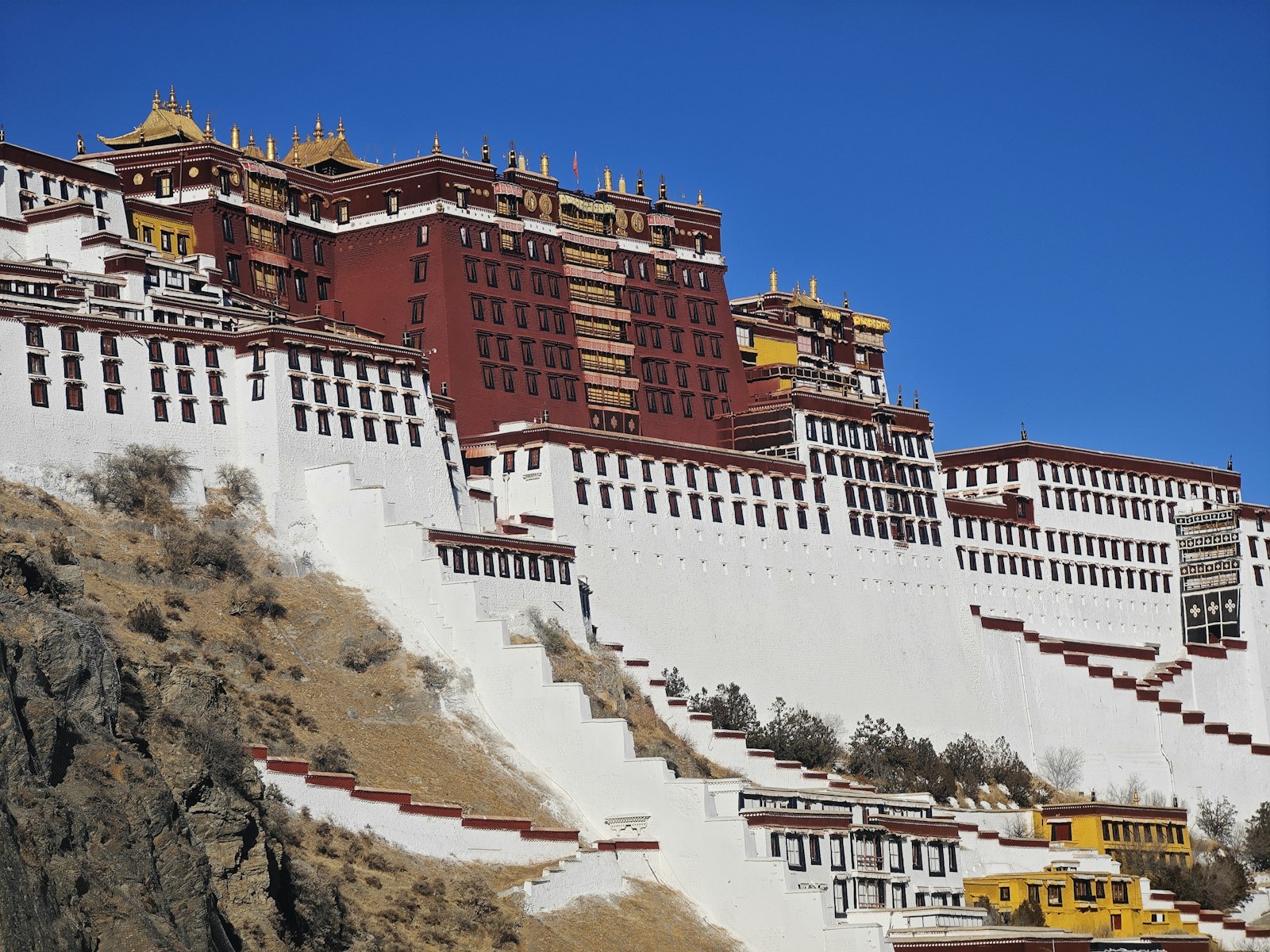
Palace walls, quiet courtyards, and time to arrive.
- Suggested stay
- 3–4 days, with a light arrival and room to adapt
- Best for
- Tibetan heritage, palace architecture & thoughtful cultural visits
- Start here
- Arrival essentials, then a guide
Make a day of it.
Itineraries, discoveries & practical notesItineraries
A gentler Lhasa itinerary: arrival time, Jokhang & a planned Potala visit
A flexible Lhasa itinerary for an authorized arranged trip, with a light arrival, Jokhang and Barkhor block, later Potala reservation, cultural alternatives and altitude-led pacing.
Practical planning
Before Lhasa: Tibet entry arrangements, documents & a lighter arrival
Prepare a foreign-passport Lhasa visit with an authorized Tibet operator, separate China and Tibet entry requirements, current documents, transport checks and an altitude-aware arrival plan.
Practical planning
Potala, Jokhang & Barkhor: reservations, respect & manageable visits
Plan Lhasa’s Potala Palace, Jokhang Temple and Barkhor within an authorized itinerary, with separate official reservations, walking demands, dress and photography rules and cultural pacing.
Before you go
Lhasa essentials
Confirm Tibet entry arrangements before committing travel
The September 2026 government guidance says foreign visitors must travel through a qualified agency, which arranges the Tibet entry permission, commonly called a Tibet Travel Permit. China entry eligibility and Tibet permission are separate matters. Confirm your traveler status, documents, itinerary and entry route with an authorized operator before making nonrefundable plans.
Requirements differ for mainland, Hong Kong, Macao and Taiwan document holders, so do not apply one traveler’s process to everyone in the group. Ask the operator about current processing, additional permissions for any planned region and how documents will be delivered or checked. A Local Pal inquiry is not an issued permit or a replacement for the required operator.
Arrange a simple transfer and an accessible base
Lhasa Gonggar Airport uses LXA, and Lhasa Railway Station is 拉萨站. Confirm the operator’s meeting point and the complete hotel transfer before arrival. Choose accommodation with a manageable entrance, luggage assistance and nearby meals; a room requiring extra steps may not suit a deliberately light first day.
Keep the first outing short and flexible, following the approved arrangements and how you feel. Discuss the altitude plan with a clinician before travel if your health or rapid arrival raises concerns. Arriving by train or being physically fit does not guarantee that you will avoid altitude illness.
Potala and Jokhang need distinct visitor arrangements
Potala Palace (布达拉宫) and Jokhang Temple (大昭寺) use real-name reservations, with different booking and entry procedures. Ask your operator to explain the correct current process for your documents and group. Public views, a Barkhor street visit and entering a heritage venue are different activities.
The Potala management identifies its official ticket system and official WeChat account, and warns against unauthorized third-party ticket sales. Do not assume a seller’s promise to obtain tickets is official access. Confirm the issued session and permitted route before arranging the rest of that day.
Let health and the setting guide the pace
Plan rest and modest exertion on arrival, and avoid further ascent if altitude symptoms develop. Worsening symptoms while resting need prompt medical attention and descent; breathing difficulty at rest, confusion or loss of coordination require urgent help. Ask your operator about the response plan rather than treating a full schedule as something to preserve at any cost.
Follow venue dress, photography and access rules, keep worshippers’ movement clear and ask before photographing people closely. Choose one main cultural visit per block with a real meal or rest afterward. A quiet courtyard, a public view and time to listen can be more meaningful than a crowded list of monuments.
Sources & useful links
Prepared by TravelPalPal using the references below. Routes and pacing are editorial suggestions; use official venue information for current tickets, opening hours and access.
- Shannan tourism department · Tibet entry documents by traveler status (September 2026; Chinese) (opens in a new tab)
- Lhasa government · Potala Palace and Jokhang reservation guidance (September 2026; Chinese) (opens in a new tab)
- Potala Palace management · Official ticket channels and third-party sales notice (Chinese) (opens in a new tab)
- Tibet tourism department · Venue routes, dress and photography rules (July 2026; Chinese) (opens in a new tab)
- UNESCO · Potala Palace, Jokhang and Norbulingka (opens in a new tab)
- CDC · High-altitude travel and symptoms requiring action (opens in a new tab)
- State Council · Practical services for international visitors (opens in a new tab)